Showing posts with label Grayson Perry. Show all posts

Monday, 16 October 2017

Everything to Everyone

“I’ve renamed it the Most Popular Exhibition Ever except for Banksy.” -Grayson Perry

On a central street in Bristol a group of people are participating in a ceramics class at Potstop Pottery. The time is around 8pm, I am passing by, the glow from the window and movement of activity inside catches my attention. It looks busy, there are lots of pots and ceramics in the window on display, people in the background making were the things I noticed, without lingering other than to take a quick photo of the name of the place on my phone. It looked fun, understated and genuine; for reasons that will soon become clear, it felt poignant given from where I had been a few minutes earlier. A hundred yards away I had just emerged from the crowds of people who were still waiting in a queue that is still four-people deep outside the Arnolfini, all waiting their turn, as I had, to enter the self-prophetically titled, ‘Most Popular Exhibition Ever!’ from artist turned celebrity, Grayson Perry. Only in retrospect, as I now walked past this real-life pottery lesson taking place before my very art weary eyes did I truly appreciate the irony of queueing to see ceramics displaying ‘British-ness’ when the real thing was happening in a slightly different form a matter of metres away.

In the artist’s own words, “Art quickly becomes less attractive when you have to queue to have a glimpse of it.” I thought, “You’re telling me!” I often found myself asking ‘why’ as I amongst the first wave of the public was funnelled on mass into the familiar atrium of the Arnolfini, more thrumming with bodies than I have ever seen before. Queueing does however add to the sense of anticipation and viewing amongst the masses a ‘shared-experience’. The fabled exhibition on its first UK stop tour from The Serpentine in London, is presented at Arnolfini across three floors; featuring ceramics amongst other things tapestries, woodcut prints, bronze sculptures and maybe on the 26th of September, just possibly a glimpse of the man himself!  All of whom probably most people attending had previously seen on various television programmes Perry had hosted on Channel Four. Nonetheless there we all were! Without such publicity that could have ever imagined that we’d be so excited about an exhibition of ceramics at the Arnolfini? Are we there to see ceramics or are we there for the moment? How much of that interest and enthusiasm has since transferred itself back into an interest and engagement with making and the arts? Were the people visiting Perry’s exhibition interested in Potstop Pottery or perhaps vice versa and either way did it matter?...

“Popularity”, Perry denotes, “is a serious business.” Whose ambition for the exhibition is to, “Widen audience for art without dumbing it down.” It is a difficult aim to fulfil. When so much of an art gallery’s funding is dependant on visitor numbers there is the temptation to fill these spaces with art that is accessible, fun or as is the case being explored here, ‘popular’. The theory of how galleries are currently justified, as Perry himself explains as,

“There are two metrics that hold weight in the art world. One is auction price: how much in cold cash someone is prepared to pay for a particular piece by a particular artist. The other is visitor figures -how many people go to see certain exhibitions…Visitor numbers are in a way another empirical measure of quality.”

This raises several debates but particularly on how museums and galleries programme their exhibitions and whether measuring success and quality based on popularity is as hard to define as it is potentially troublesome. However, I have never looked at the reasons why people visit or not art galleries and can only assume that those entrusted with the precarious task of filling these spaces programme exhibitions based on a balance and not fall into labels of marketing whereby an exhibition is popular as to another that be deemed challenging. Most exhibitions fall into multiple if not hazy realms of categorisation. I do not have the answers and neither does Grayson Perry it seems, but what I do admire him for is his ability to articulate issues within the arts and put forward questions and issues that we should think about, if not challenge because he seems for an appreciation of art that is not passive even if it is 'popular'.

For an artist that continues to explore both his own and the nation’s identity, Perry has either unwittingly or cleverly almost marketed himself as his transgender alter-ego, Clare; or the man in the dress that makes pots. These identities that were once part of the challenging and exploration of what Grayson Perry’s art is about [identity, perception, surfaces] have since become ‘accepted’ and familiar so it becomes an interesting contrast and dilemma of what happens when the outsider is no longer outside?! My friend gave the analogy of anti-establishment American punk band Green Day becoming so popular that, that they aren’t quite punk anymore. Maybe in being popular, Perry and Green Day can reach a wider audience with the brand of unconformity or rebellion that they are selling, but on the negative side, maybe it also gets diluted and becomes acceptably-edgy rather than maintaining its power to cause affect through shock. This sentiment best echoed in the context of having this exhibition in Bristol as its first place to be shown outside of London is telling of the city’s relationship with graffiti art and the similar dichotomy of the ‘political made popular’ with work made by Banksy whose exhibitions at Weston’s Tropicana and Bristol Museum were arguably, at least in terms of visitor numbers, amongst the most popular exhibitions in the area in the last decade!
 
'Kenilworth AM1' 2010 Custom-built motorcycle
An exhibition with this amount of hype comes with a huge amount of expectation and we are welcomed on the first floor with works which explore, ‘what makes a man’. A tapestry made in response to the ceremony of the blessing of the banners with Durham Miners as part of a Channel Four programme on different social-class tribes, traditions and how these factors shape a sense of communal identity. It also includes Perry’s custom-made motorcycle in pink and blue with its own Popemobile style box for Alan Measles (his teddy bear). The symbolism of what masculinity is thrown away from perceived stereotypes with the inclusion of words such as, humility, patience and chastity. In the upstairs galleries the theme of identity continues with an exploration of ‘Britishness’ and the ‘tribes’ of Britain exploring the impact of Brexit amongst other social and political issues. I would speculate that one of the reasons that this exhibition and Grayson Perry are so popular is because he makes art that engages and is interested in people and what they have to say. Who doesn’t want to be listened to? A huge positive that both the public and people in power should draw from Perry’s work, is the benefit of integrating arts more into society as a way of engaging discussion and providing a voice on issues in a way that has a high profile but allows people to express their views more openly because it does not conform with the usual systems of government.

'Death of a Working Hero' 2016 Tapestry
'King of Nowhere' 2015 Cast iron and mixed media
I am conscious that I have written little on the actual work and content of this exhibition, as there is a LOT in it, but I feel somewhat fatigued with seeing these works again; their message already written or spoken much about on their corresponding televised documentaries. One pot represents the Brexit voters the other the remainers; both unremarkably similar. I am now more interested in the phenomenon of the show as a whole, why it is popular and what implications, opportunities or indeed threats does that place to art, artists, the public and galleries etc. For example, I would be interested in Grayson Perry using his ‘celebrity’ to empower people as an artist to make their own art/images/pots in response to the issues he raises rather than documenting them as is the formula he has begun to adopt.     

I have a problem with the idea of ‘art for everyone’ (said the girl who writes blog posts so that others may be inspired to see or understand art work differently....) Maybe I am ignorant, but I am supposedly part of the ‘art world’ having studied it and there are huge swathes of art past and present, I don’t understand or that makes me feel uncomfortable. If compelled, some of it I attempt to figure out and may be rewarded by my puzzle-solving abilities... And sometimes, for a variety of reasons too numerous to mention here, I cannot be bothered! It should be enough not to have to like it all but also to give everything a try before you dismiss it and know why you do not like something. The catalogue for the exhibition states that,
 
‘He [Perry] thinks art shouldn’t be an exclusive club for people who ‘get’ it, but for everyone…’
 
The problem with trying to do something that is popular or appeals to everyone is that in trying to be everything to everyone the result ends up ultimately, being about nothing. Who is 'everyone' anyway? I think we are all so different that it is almost impossible (surely) to make work that appeals to all. Art work and curation of galleries should never panda to a market-driven sense of taste or inclusiveness, quite the opposite; they should feel more empowered to create new discussions, trends, topics. As another analogy; I enjoy visiting museums and looking at entomology collections and dinosaur skeletons, it doesn’t mean I know or even need to know much or anything about them in order to appreciate them. My reasons for visiting are driven out of curiosity, something to do and experience, wanting to learn or be challenged. Our relationship with art and art galleries is always so much more confrontational and met with a different set of expectations different but irrespective of everyone’s personal experience. I think that educationally we do need to do more to teach how to read visual language and not just how to make it and galleries need to take their own responsibility at always adapting to get better at inspiring, promoting, enthusing, articulating and creating reasons why people should go and see/experience art. Easier said than done!  
 
'Battle of Britain' 2017 Tapestry 302.7 x 701cm.
As I leave the crowds I wonder, how memorable individual works in this exhibition will be in twenty, fifty, a hundred years time? In what way will we be talking about them and how does this compare to works that were deemed ‘unpopular’ in their own time and have since become significantly valued or culturally important? The saving feature of Perry’s work is that the production and craft that goes into producing them has a hand-made sense of integrity that will ensure their preservation in stopping these pieces becoming quick one-liners. Though I feel that the increasing appeal is not through what Perry makes but what he says, writes and his interaction with the people who visit galleries (or not) and the institutions of art itself [the gallery, the art school, the museum etc.]. These are good conversations to be happening and I can only hope they act as a spring-board or catalyst for change in people’s aversion to viewing art or going to galleries or galleries/museums to take more risks with what they show, promoting a diversity between the ‘popular’, the ‘outsider’ the new, the old, the controversial, the cerebral, the political, the visual and everything in-between. It is a big ask and comes with high expectations on both sides, but the Arnolfini has the perfect opportunity at the moment as it asks audiences to rewrite its ‘rules’ for its continued ethos going forward [see https://www.arnolfini.org.uk/whatson/new-rules].

In light of the current exhibition the rule I would suggest is; 
You cannot please everyone but everyone wants to be pleased.
Or in other words, do not be afraid to show work that people may not like or understand, that is challenging or uncomfortable but assume that everyone who does visit you is there because they want to engage and to have a meaningful experience, so try and give it to them!

Contribute to the hype and Arnolfini's visitor numbers as your feet can help fund more shows by visiting 'The Most Popular Exhibition Ever!' open TUES-SUN 11.00-18.00 until Christmas Eve! https://www.arnolfini.org.uk/whatson/the-most-popular-art-exhibition-ever-grayson-perry

Monday, 8 September 2014

You don't have to like it all

“Perhaps the most shocking tactic that’s left to artists these days is sincerity.” –Grayson Perry
 
A year ago on October 15th I tuned in to Radio 4 for the first time. Make of that what you will, but to my young ears even the thought of listening to anything other than music on the radio (even with the annoying adverts) seemed like a waste of airwaves. Fortunately, such is my commitment to art and attempting to understand it better that I was willing to change stations that day to listen to a Turner Prize winning transvestite potter (as he calls himself)  speculate for an hour on the age old debate of ‘what is art’ amongst other things. How wrong I was not to tune into Radio 4 until then, I’m so glad I did and I’m sure that if Grayson Perry knew (or even cared) that I was adjusting my preset music channels on my radio to listen to him discuss the subject of taste in art, would be slightly amused (or perhaps horrified) by the irony of my decision.
 
 At the time when I listened to these weekly, four-part lectures (known as the Reith Lectures) I felt quite productively riled by it all, it felt more like a manifesto, a ‘call to arms’ than a lecture. I was strongly in agreement with many of his views, from the intimidating nature of commercial galleries, self consciousness in making art, the difficulty of irony and conflict between seriousness and amateur in art, to how anti-establishment loses its edge when it becomes popular. It was as though he had so entertainingly and eloquently voiced many of the opinions and thoughts I’d contemplated or more often heard voiced by my friends and peers (artists and non artists alike). And like many I spoke to at the time, I identified with his delivery of plain speaking, honest observation, wit and impassioned rhetoric. So much so, that I made copious notes on it all with lots of circling and heavy underlining of things which really struck-a-chord or had resonance. There were a lot! I never published these thoughts into a post, until now, probably because at the time it was so popular I felt I’d only be regurgitating what everyone already felt and knew.
 
 
Nearly a year later and the riling and irony continues as I’ve retreated to the confines of my room to escape the tawdry blare of the X Factor to read the newly published book, ‘Playing to the Gallery’ which is almost word-for-word a transcript of the Reith Lectures Perry gave last year. I have no problem in knowing which I prefer, which I undoubtedly enjoy the most and which I think is a steaming pile of trash, but paradoxically, as Perry in the opening chapter of the book mentions, there are problems in knowing what is good taste and which is bad. Is taste purely subjective? Where do ideas of quality and authenticity sit when deciding a work’s value? Perry argues that in the same way beauty can be determined by a familiarity of reinforced ideas, is similar to how we assert and measure taste with popularity, or in other words, the myth of ‘if it’s popular it must be good’. However, as he also acknowledges, popularity and the arts don’t necessarily go hand-in-hand with some artists choosing to reject the idea altogether. What is in agreement is that there is a certain set of criteria or ‘boundaries’ as Perry names them which determine whether a work of art is a work of art, although this in-turn depends on the right people saying or deciding it is....it all gets a bit woolly; and if we are to start judging whether the X Factor is good or poor taste then we might as well start asking is the X Factor art?
 
“ ‘We’re all bohemians now’. And if you think about it, all the things that were once seen as subversive and dangerous like tattoos and piercings and drugs and interracial sex and fetishism and other-ness –they crop up on X Factor now on a Saturday night for family viewing.
 
 
As a creative person/artist (albeit someone who has studied it and now remains drifting, a wandering purveyor on the outskirts of the world that is art) much of  Perry’s discussion is preaching to the converted but offers a refreshingly honest critique of the art world, its challenges and its pitfalls; advice in tenacity and commitment, for both aspiring, ‘emerging’ and practicing artists alike.
 
“As an artist the ability to resist peer pressure, to trust one’s own judgement, is vital, but it can be a lonely and anxiety-inducing procedure.”
 
And on the subject of angst, there’s a lot of it in this book, which is probably why I related to it so much, Perry addresses the angst felt in viewing and creating art, in particular how difficult it is to remain un-cynical when, he argues, the legacy of art history has already covered so many acts of rebellion, discovery, shock and protest that it leaves current generates of artists without a ‘cause’...what is art if it is no longer about storytelling, mass communication or pushing boundaries? And is that in itself something to make art about?
 
“Because of course art’s primary role is not an asset class and it’s not necessarily about being an urban-regeneration catalyst, Its most important role is to make meaning.”
 
 
This is one of those art books that will probably end up on a first year reading list on Fine Art degree courses, like ‘Ways of seeing’ by Berger or ‘But is it art?’ by Cynthia Freeland.  Rightly so, it covers much in the way of art history by offering how it has affected or how we can interpret contemporary art today. However all of these books are very much starting points to these wider debates and Perry is particularly good at provoking in an informed way but slightly holds back from being the academic that he is probably through fear of alienating people.
 
If anything it points to the fact that educating people about art is essential to both its survival and future development, which isn’t necessarily about making more artists but equipping people, even the most tentative art gallery tourist with the confidence to question and talk about art. True you can still experience art without having any education on the subject, but I think that experience is all the richer and more rewarding when there is some understanding of why, when and how a work was created. That’s not the same as saying people should be comfortable around art, it usually works best when it’s the opposite, but should be about encouraging people that if they think, look, experience or talk about art then they will be rewarded with alternative world views, new perspectives on things or ways of seeing. I still find looking and understanding a lot of art incredibly difficult, but the difference is that I’ve learnt how to enjoy that challenge and have subjected myself to as much as I can so I am familiar with how to go about trying to understand it if I want to. This may have also come at a cost of becoming increasingly sceptical and cynical about a lot of art, but it is all the more exciting when I find something that unsettles that perspective. Art is a challenge and a question and as Perry acknowledges, needs people to keep questioning it and the subjects it deals with. 
 
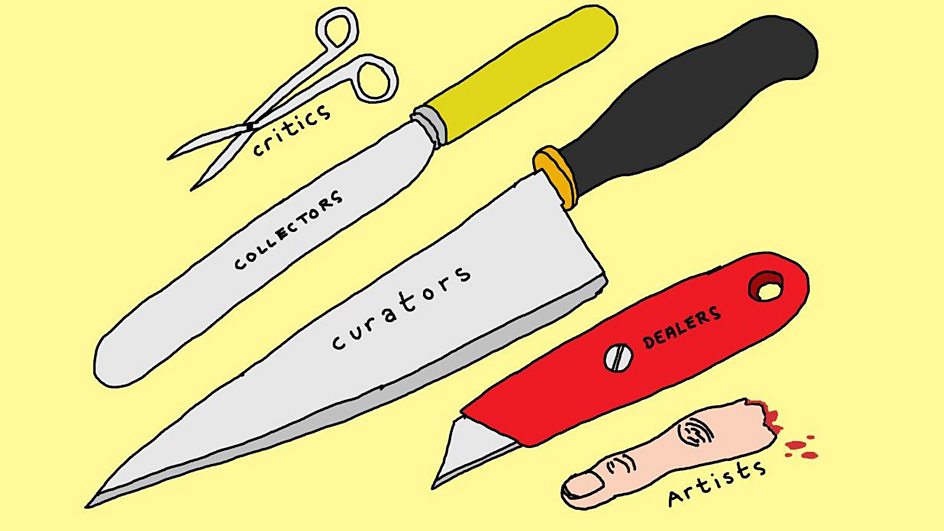
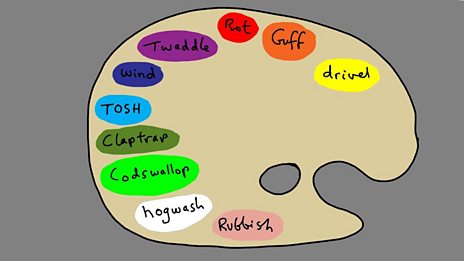
In some ways in Perry's initial resisting the arts establishment only to have now become part of it derives from his own experiences and so I wonder if his central polemic of, ‘anyone can enjoy art’ and explanations for doing so is lost if the audience that would have most to gain from hearing this message is also the least likely audience to be reading a book on art. At least through his determined, angst ridden acceptance into the art world, Perry has become more widely known, dare I say, more ‘popular’ and in being broadcast on Radio 4 reached a wider audience than what it would have in book format alone? Clearly even more if it had been aired on the X factor! Although I often wonder if everyone accepted and understood art then would it still be art? Or would it somehow loose its mystery or its pompousness and in its familiarity become dull or breed contempt? Maybe art's greatest asset, its key to longevity is the search to understanding it...?Instead of trying to make sense of it all I suppose I should try to embrace art in its many contradictions, challenges and on-going changes as they're the reasons I still want to find out more. An extra addition to the book is that it contains several amusing cartoons drawn by Perry that dryly illustrate some of the opinions in the book, but above all it reads like any good lecture should, it informs you, it provokes you, it amuses you and ultimately it lifts you,
 
"At this point I may risk a dark sincerity. I feel it is a noble thing to be an artist. You're a pilgrim on the road to meaning."
 
My own dark sincerity is that despite how good it was I haven't listened to Radio 4 since, but I have continued to make and see a whole lot of art.