Monday, 15 May 2017

Glasshouse Effect

Nothing like the sound of cracking glass to make one’s senses suddenly on edge, even more so if one finds oneself hearing that sound whilst standing inside a giant domed-glass structure! Though fear-not impending doom, for this was the sound installation of German born artist, LotharBaumgarten [1944] exhibited in the Palacio de Cristal in Madrid’s Retiro Park. Phew!
 
The impressive 22 metres high glass and iron, birdcage-like structure built in the 19th century to exhibit the flora and fauna of the Philippines (Spain’s last colony) is now used by the Reina Sofia Gallery to host temporary exhibitions. Between November 3rd 2016 and April 16th 2017, Lothar Baumgarten’s sound piece, ‘The ship is going under, the ice is breaking through’ was installed in this space. Amid the more permanent cultural highlights that Madrid has to offer; Picasso’s Guernica, Goya, Bosch and Velázquez, I was fortunate enough to discover and experience this work first-hand.
 
Firstly, the Palacio de Cristal is a spectacular space. Architecturally and visually pleasing, like walking inside a giant bird-cage or greenhouse, one is ever conscious upon stepping inside, that it is made of glass the surrounding trees and park outside framed from the inside, outside; greenish tinged light and warmth floods in somehow creating a phenomenological illusion of filling the vast space that is, other than a few chairs and the bodies of the people that occupy it, physically empty. Though one cannot escape the feeling of containment created by the skeletal ribs that form the iron framework on which that glass is supported, they create their own architecture of shadows across the floor. It is refreshing to be in a space this big and imposing yet to have ‘nothing’ in it, and by nothing I mean, no sculptures, no stuff, no physical things, artefacts or objects which would in some ways only distract from the grand and interesting visuals of the space itself. In a capitalist culture obsessed with products and production I feel increasingly drawn to art that uses existing space, material or subject matter without need to occupy it with too much (if at all) physical ‘stuff’. I recall Rita Mcbride’s laser installation within the carnivorous belly of Liverpool’s Toxteth reservoir and Susan Philpsz’s sound installations under bridges. Pieces that relate to their context and enhance it, make it accessible and seen with fresh-eyes without them intruding, adorning or infiltrating the space in a lumpy or materialistic way. Sound and light animate and create atmosphere or thought in these places in a far more experiential way.
 
All this spectacle and I have not even begun writing about the actual work yet. Though with sound it is perhaps hard to know where the work begins and ends, is it with the space in which the sound is heard, or is it the actual sound itself? Probably a combination of both. The ‘sound’ in this instance being that of cracking ice as it thaws on the Hudson river, New York, where the artist works. It cleverly creates the illusion, in the context of the Palacio de Cristal, of the sound of glass breaking, the threat of collapse physically immanent. It is a slow, suspenseful sound rather than the more immediate sound of the shattering of glass. Given Baumgarten’s practice of subverting the Westernised view of the world and the dialectical relationship between nature and culture it is an appropriate use of sound and context. The context of this Spanish structure built to display and organise the flora and fauna from the Philippines, a very Westernised construct and an institute of power, wealth and classification is given a very natural and dystopian sound piece that threatens to destroy the building itself whilst mocking us, in that it is all, in fact a hoax. The glass isn’t really breaking but the structures, systems and monuments that we build are in constant flux. The accompanying pamphlet handed to visitors like myself explains that it is,  
 
‘a tonal analogy for the crashing stocks and assets of the insatiable ‘shark trading’ of financial markets; it concerns greedy speculation about unlimited economic growth and the resulting impact on the dramatically changing global climate.’
 
Indeed, or perhaps, just as we have recovered from realising that the glass above our heads is not breaking, an even heavier foreboding beckons, that this sound; not of glass but ice, becomes the weighty realisation of the thawing and melting of glaciers and global warming. The immediate localised threat taken away, the sense of the fragility of a much greater, global threat, heightened.

“This melting ice is at odds with the sun that floods the Palacio with light, ...yet there is a logic here too. Something is breaking, melting, disappearing in plain sight, though it goes unnoticed. Effects of actions that cannot be seen can be felt and heard elsewhere, even while we might pretend otherwise. The title of the work speaks explicitly of disaster, one that has many keen resonances – past and present, real-life and literary, economic, ecological, social, philosophical and physical disasters – all are all bound up in this.”  –Anneka French
 
Such is the work of Lothar Baumgarten whom has been working since the sixties but only just entered my periphery of art knowledge (I apologise, it is an ever increasing field). I am impressed at how this piece operates on so many levels, from the bodily effect it has on the viewer (an initial sense of panic soon replaced by one of laughter or relief) to the almost political affect it has on the context within which it is meant to occupy. One of his previous works titled, ‘Unsettled objects’ 1968-70 involved looking at how ethnographic museums, including an all time favourite of mine, Pitt Rivers and how they ‘frame the viewer’s perception through the manner in which their objects are displayed’. I only wish I had known of this before as it would have been so apt during a project that involved looking at museum modes of classification at the Somerset Heritage Centre.
 
For me personally this work marks a shift in how, perhaps, as I’ve grown older I have become more critical, more politically and globally conscious, less concerned with the production of youth, obsessed with making and churning physical artefacts  out. Now I feel more conscientious of process and ‘need’ to make, instead increasingly interested in minimal states, self-sustaining means of producing and work that responds or highlights to the beauty, intrigue or nature of what already exists. There was a time when I could never have dreamed that a mere sound piece alone would move me to such provocations; I am humbled and pleased that my tastes and understanding of art are ever evolving.

Please watch the video below to hear it for yourself.


Tuesday, 18 April 2017

Samples

Just a short post to mention an exciting book that arrived today; in 2013 during my first visit to the Venice Biennale I discovered the work of Columbian born artist, José Antonio Suárez Londoño. The work consisted of hundreds of tiny drawings/paintings on paper laid out in glass cases in the centre of the ‘Encyclopaedic Palace’. I fell in love with these quiet, captivating and imaginative drawings admiring their sometimes referential and other times surreal-looking or ‘automatic’ subconsciously derived imagery. They were an inspiration for my own drawing-a-day’ projects and continue to be motivational for my sketchbooks which I still produce but seldom show. I have often written about the 'need' to draw and mind-set induced by the commitment to drawing regularly. They are personal items of use, obsession and need so I have never felt that they need to be subject to the self-conscious inducing scrutiny or rationale of an audience or gallery, however I have shown some and subsequently am grateful that Londoño’s work has been shown in the public domain and embraces an outsider art sense of integrity, to be just what they are (but by all means makes them no less brilliant), drawings in notebooks.


“José Antonio Suárez Londoño revives the profession of artist as a reflection of his time, his surroundings, his personal experience and that of the moment in which he lives.”   

I have been in search of a book of his work for the last four years (they are as hard to come by as it is to repeatedly have to type his name into search engines) and the more I learn about him the more interesting he becomes [For example, I have just discovered he illustrated a book of poetry by Patti Smith]. The book is a retrospective catalogue of his works that were shown in 2015 in Spain Columbia and France. Once I have read the book I will perhaps post more info on here but for now wanted to introduce to more people the work of this exciting artist.    
"Since the 1970s José Antonio Suárez Londoño has expressed himself through drawing, in the form of his prints, his numerous notebooks and rubber stamps. The intense focus and emphasis on a single medium has allowed the artist to create a coherent body of work, which has become an undoubted reference point for the new generations of artists now championing drawing as an essential tool within their artistic activities. Suárez Londoño’s constant, daily endeavours are revealed through an oeuvre that represents a type of inventory of the world, a diary that almost obsessively describes his situation and concerns...an artist for whom drawing is a way to present the viewer with new micro-universes, encouraging us to construct our own narrative."

To View an Online Book of Suárez Londoño’s Works Click Here

Images and Text Sourced from: José Antonio Suárez Londoño: Samples, (2015) This Side Up, Madrid.

Monday, 27 March 2017

Into the Wild...

The independent artists’ book HIVE IV is to be released into the wild on Saturday 1st April 2017. The publication of the book will coincide with an exhibition featuring each contributor’s original artwork at The Old Brick Workshop, Wellington, Somerset, throughout the first week of April.
 
The exhibition Private View / Book Launch will take place on Saturday 1st April, 18.00 - 20.30. A limited edition, signed copy of the book will also be auctioned on the  night.
HIVE is an ever-expanding group of artists associated with the occasionally-published artists’ book of the same name. Since 2014 there have been three issues of HIVE, each edited by different artists who have also set the theme for each issue. Past themes include: ‘Track 6’, ‘The Wrong Side of 15 Minutes’ and ‘Out of Line’. The concept of HIVE [that has since inspired the spin-off publication SWARM] was originally initiated by artist/educator Stuart Rosamond and artist Frank Edmunds to promote creativity and give exposure to the work of an eclectic group of artists, photographers and designers based in the South West and beyond. HIVE IV will feature the work of twenty artists;
 
Rico Ajao,  Chris Dart,  Roger Dean,  Frank Edmunds,  Jon England,  Tony Girardot,  Nina Gronw-Lewis,  Kevin Hawker,  Martin Jackson,  James Marsden,  Tim Martin,  Jane Mowat,  Natalie Parsley,  Eileen Rosamond,  Stuart Rosamond,  Ruby Rowswell,  Chris Taylor,  John Watling,  Rob Watts,  Deborah Westmancoat.
 
 and the list of potential contributors to future editions is constantly growing. HIVE IV is edited by graphic designer Rob Watts and will feature artworks responding to the theme of ‘Lost &  Found’.
 
Visitors are invited to celebrate the launch of HIVE IV with the artists at the Private View of the exhibition at The Old Brick Workshop, Wellington, Somerset, on Saturday 1st April, 18.00 - 20.30, where they can view the original artworks from HIVE IV [Lost & Found] created by its twenty contributing artists. This will be the first time that contributors’ works have been publicly exhibited. During the evening there will be a live auction when visitors can bid for a limited edition, signed copy of HIVE IV, as one of 22 copies only ever to be produced; proceeds of which will go towards funding future HIVE publications. The exhibition will remain open to the public to view for free from Monday 3rd April to Saturday 8th April, open 11.00 - 16.30.
 
Graphics and Photo by Rob Watts
 
HIVE IV [Lost & Found] EXHIBITION
The Old Brick Workshop
Higher Poole, Wellington, Somerset TA21 9HW Monday 3rd April - Saturday 8th April 2017 Open 11.00 - 16.30
PRIVATE VIEW / BOOK LAUNCH / HIVE AUCTION Saturday 1st April 2017 18.00 - 20.30
 
For further information please visit www.theoldbrickworkshop.com


Thursday, 16 March 2017

Of Mutability

Agricultural objects, detritus, artefacts from the consumer-age lay to rust, surfaces weathered, worn and washed with time, light travels across coastal vales, misty veils and illusions of by-gone places, nostalgia, memories, horizons, distances and journeys. Nothing is ever fixed. Nothing stays ever the same. In the words of Percy Shelley's famous poem, ‘Nought may endure but mutability’.
 
Mutability is a good word, I’ve decided. Its official that I also think it is a good word to describe the transformations of the landscape and our place as equally changeable beings within it; and how that process works both ways for both better and sometimes not. This should be nothing of a revelation to many, countless poets, writers and artists have been writing on mutability and the landscape for years before the idea settled into my post-arts degree addled brain. In fact, it was the word,  muted rather than mutability, that first sprang to mind upon seeing the work exhibited in ‘The Transformed Land’ currently on show at The Brewhouse Arts Centre in Taunton.
 
Eleanor Goulding, Linn O'Carroll and Russell Denman's work
exhibited as part of 'The Transformed Land' 
 Muted, in that the colour (or lack-of) and general sense of a feeling of quiet or mute distilment, permeated the works within this exhibition. Featuring the work of 14 artists there are one or two exceptions to this observation, notably David Daniels’s bold, bright, graphic, stylised, Julian Opie-like digital prints of lonely winding rivers, streams and hillsides. Where there is colour in other works it is controlled, reserved, sparing. Jason Miller’s watercolours quietly hum with the delicate quivering, glow of a Rothko and David Smith’s collaged mixed-media pieces also use traces of colour but in a formalistic way. They appear considered and reflective rather than spontaneous. Andrew George’s egg tempera pieces of big, dramatic coastal landscapes are executed with superb scale and technical ability with a colour palette that is both natural but also nostalgic and reminiscent of post-war landscape artists such as Eric Ravillious’s paintings. And they really are BIG paintings with fine detail that do a great job at drawing the viewer in.
 
Andrew George 'Coastal Path Dorset' Egg tempera on gesso panel. 
I have no problems with my perceived lack of colour in this exhibition, it demonstrates that the work within it is on the whole very contemplative; these are artists whose work reflects that they must spend time in the places they depict, go for walks, take photos, make sketches, match colours, collect objects, materials and see how the landscape changes over time. The only perhaps pitfall to this is that perhaps there is too much work in this exhibition that is careful and not enough that appears as a spontaneous or immediate reaction or capturing of the landscape. This reflects perhaps, the interests of the exhibition’s curator, Paul Newman whose own work, graphite drawings of trees and landscapes is very precise and technically masterful as they are sensitively observed. Similarly, the wood engravings of Howard Phipps are competent as they are crowd-pleasing images of countryside it’s just that personally I would like to have seen in addition to these some more work that took less caution, reflection and tranquillity and perhaps demonstrated an immediate reaction or the wildness and sometimes fearful relationship we have with land and landscape.

Howard Phipps 'Malacombe Bottom' Wood engraving.
One artist’s work who does counterbalance this slightly in this exhibition is Andrew Lansley whose drawings show a lot of personality and are taken from views sometimes literally on his doorstep. They have more of that sense of immediacy that I was looking for, the other is Clive Walley whose depictions of trees are amongst the more painterly works in the exhibition. The other, for me personally is Linn O’Carroll. Based on the lived-experience of walking in South Wiltshire where the artist has lived for the last twenty years; found, discarded rusty objects ranging from a shopping basket, hay forks, hooks, pliers and hundreds of nails lay seemingly systematically placed in a circular motif on a weathered (what I presume were former carpet tiles) surface on the gallery floor. It is a calendar, a Tony Cragg meets Goldsworthy and amazing Dutch artist herman de vries all at once; an infinity of lists and one of possibly three pieces in the whole exhibition that refers to the manmade in the environment and that our relationship with land may not always be a harmonious one. These are honest fragments, readymade art in some ways and for me, greater reflect a real sense of time, weather and the relationship some humans have with land than some of the representational or abstract works.   
  
Linn O'Carroll
Elsewhere in the exhibition Russell Denman’s wooden models of huts continue the manmade theme and whilst fascinatingly constructed I am a bit less sure of where they fit into the overall exhibition other than as posing as possible designs for dwellings within the landscape? Eleanor Goulding’s digital HD video ‘Spring Observances’ is beautifully shot depicting a stranded, made derelict  by rust, ship on the coast. I am visually biased being drawn to such images, finding the traces of where humans have interacted with land more fascinating than the idealised, haunting or romantic emptiness of ones without. Is it possible, I wonder to ‘know’ the landscape without the human in it? If not then it seems a relevant decision that so many artists try to detach the human presence from their work.
 
Andrew Lansley 'Leaving Dartmoor' Egg tempera
Where ‘The Transformed Land’ really excels is at having a diverse array of mediums on display, from woodcut, to painting, to drawing, sculpture and conceptual as well as representational based practices. At the more conceptual end of the scale, Deborah Westmancoat’s work combines weather-like processes of evaporation and flooding with materials of handmade oak gall ink and collected water from glaciers. It shares its approach with several other works in this exhibition that imply a response to landscape that is seasonal, site specific or one of measuring, collecting and documenting. It feels museum-like, a form of attempting to preserve it through documentation.
 
It is rewarding to have been introduced to the work of so many new artists in this exhibition, my only small regret is the unfortunate timing that makes this exhibition the third show in a row at The Brewhouse to explore the theme of land, landscape, the sea or the environment and I hope that it doesn't dilute people's interest in seeing this exhibition or thinking it is the same as previous ones, as it is quietly captivating and deserves to be seen with open eyes. 
 
You can visit ‘The Transformed Land’ at The Brewhouse Arts Centre, Taunton until April 29th 2017 www.thebrewhouse.net

Wednesday, 1 March 2017

They came from outer Somerton...

In Jack Finney’s 1950s sci-fi classic ‘Invasion of the body snatchers’ alien seeds invade Earth from outer-space replacing people with perfect physical duplicates grown from plantlike pods. The novel become a metaphor for the paranoia and fears of communist-like conformity present in US society at the time; an examination of our fear of 'the other'. In the year 2017 I explore what can a 1950’s sci-fi novel and an exhibition featuring human-sized, interactive and immersive sculptures have in common and what relevance, if any, that has today.....

The human mind searches for cause and effect, always; and we all prefer the weird and thrilling to the dull and commonplace as an answer.”

Where did they come from? Why are they here?

The podules lie dormant, an almost engulfing presence but one that is so strange that it beckons further investigation from sight and touch of their contours and hairs, intestinal-like villi and skins of varying colours and textures. I pluck up the courage to step-inside one and climb into another -Ooer! Perhaps never to be seen again like a fly lured into a venus flytrap... inside I’m enveloped in a soft-padded walled membrane, an outer-shell covered in veins that seem to pulse and thrum with a subtle glow that suggests the presence of life or an otherworldly-ness. Though there is nothing sinister about these pods if anything they are more bodily, womb-like, relaxing. Far bigger than a man but ergonomically proportioned to fit the cup of a hand or enclose the shape of a seated human-figure. There is an indistinct sound generated from within the pods that I cannot quite place and a smell, not unpleasant, but another sensory distraction in what is already an unusual encounter. 
 
Sometimes fiction is more remarkable than fact.The fact is, the day is Tuesday 28th February and I am visiting Somerton’s Ace Arts Gallery to view an exhibition by Jan Nedojadlo. What I am confronted with are a series of large fabric clad, textured pod-like or utopian structures that are interactive, designed with places within which to sit, rest and explore (the only ingredient missing probably was a mist machine). These pods, like their sci-fi counterpart are designed to inhabit the human form in which the viewer can become miniaturised into a sensorial innerworld of lights, textures and smells. Thankfully with these pods there is no threat of menace or intent on creating body-doubles to take over the world, but they do have the ability to change or alter those who choose to spend time in them offering unique spaces for rest, reflection and relax. In some ways the pods do contend with the notion of ‘fear of the other’ by creating spaces that help people confront fears of disability and/or mental health. I’d like to see some really political pods, out of context in the gallery and for example in campsites in Calais for refugees, made with refugees and other minority groups and the possible outcomes that could produce.
 
Their form,derived from human organs, hands and the liver,
commissioned by a pharmaceutical company, another, a spine built working with patients in mind for the Stoke Mandiville Spinal Unit. That in itself should be enough reason to want to investigate but I was almost disappointed to accept the grown-up reality that these imaginative things had not landed from space and as far as I am aware at least, made by an artist who is human of some sort (I’ve met a few artists who I’d be less sure!). The illusion of organic form being made from common place or recycled materials such as the bristles from brooms, towels and wire was no less fantastical in its inventiveness and transformation, in fact perhaps unintentionally it links well with the environmental themes in ‘Invasion of the body snatchers’ but nonetheless I was left with the overwhelming feeling that this work is better confronted not knowing that this red furry husk-shaped thing I’d taken fascination in exploring from every angle for the last ten minutes is meant to be a liver or that their purpose of creation arose from a utilitarian practicality around its funding as either a health-care tool or science fair exhibit,
both of which for me turn it into a holistic form of glorified interactive furniture. I want to believe the pods are art objects in their own right, my critique more perhaps on the way in which audiences are invited to think about these objects, the amount of information that is presented, is what I am questioning. Sure, one can choose not to read artist statements, but I think why have them there at all if they’re not meant to be read. This exhibition had me thinking a lot about interpretation and the imaginativeness of it, sometimes the overly prescriptive nature of how an art work is rationalised can alienate (if you pardon the pun) an audience rather than present one distinct concept as a point from which many meanings can proliferate. I do not need to know that the piece central to this exhibition titled ‘Hand's of God’ was created from a Christian ‘experience’ in order for me to relate to it in a spiritual way. 
 
When modern men and women lost religious faith, they lost the associated belief that human beings are special, that we were created with purpose to undertake a life with meaning. Science, technology, and politics have not yet filled that void and probably never will be able to do so, especially not if they continue to be powered by the ideologies that have thus far informed them. If we believe that we are just animals, without immortal souls, we are already but one step removed from pod people.” Dean Koontz writing about ‘Invasion of the Body Snatchers’

I’ve tried to use ‘Invasion of the body snatchers’ as a way of framing the themes and ideas I feel has been explored in this work. It is a different approach to how I normally write and viewers visiting the actual exhibition may experience the it very differently. I would just ask that sometimes art is at its most creative for the questions that it raises or the interpretations it ignites rather than knowing its answers. Answers are boring.

Forth into the unknown...
 
Catch the podules before the beam of to another galaxy near you at Ace Arts, Somerton until March 11th. http://www.acearts.co.uk/
 

Saturday, 11 February 2017

Everything You've Come To Expect


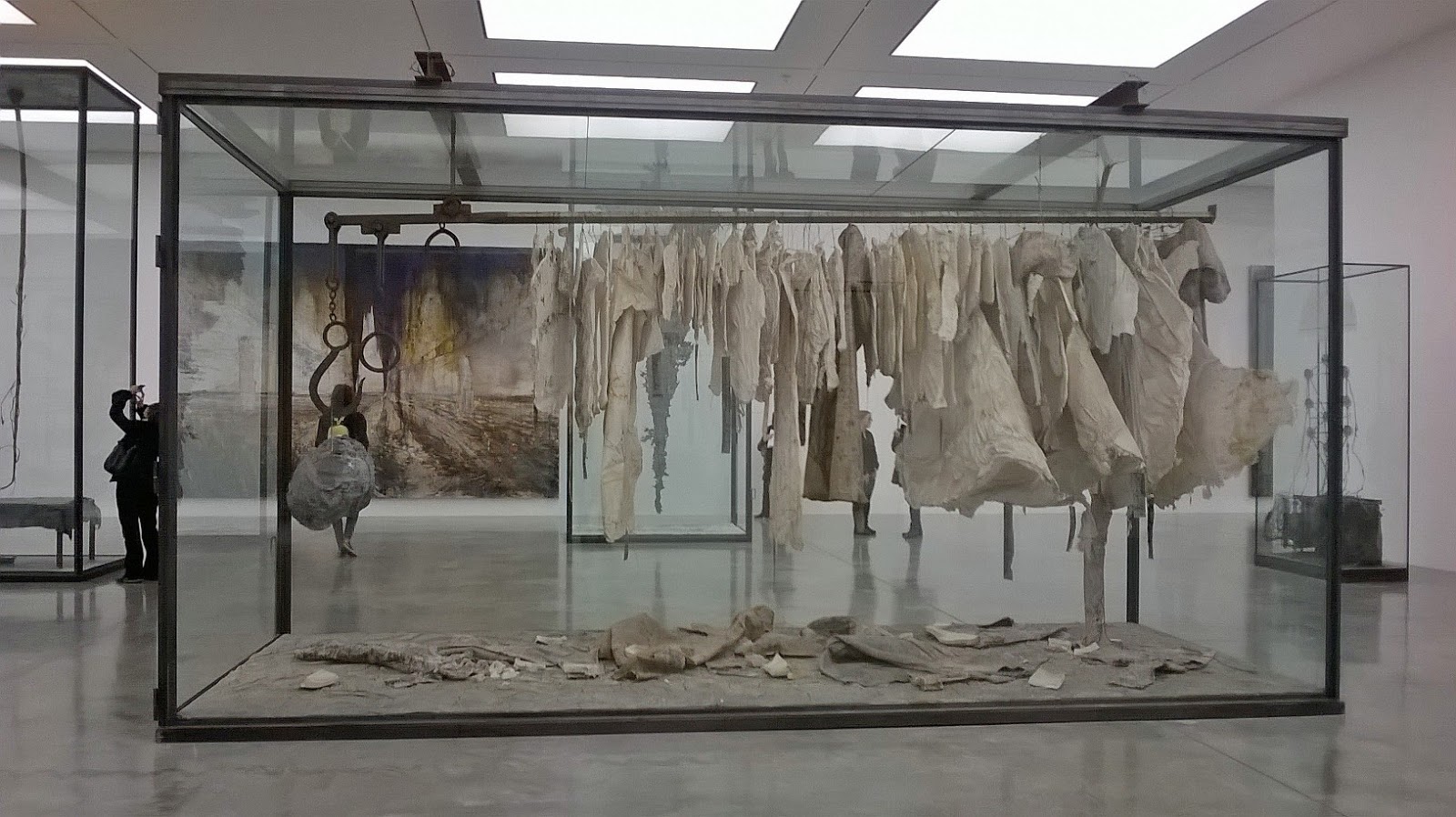
Anselm Kiefer 'Die Walkuren' 2016
Glass, metal, fabric, shellac, plaster, lead, dried plants, ashes. 293 x 560 x 231cm. 

During my Masters there was a lot of talk, generally, but a lot talk specifically about effect and in relation to what effect art works can have on a viewer. Without too much of the philosophy, of which I still struggle to fully grasp, these were phenomenological discussions about how being in the presence of an artwork can physically and/or psychologically effect the viewer; the definition in my mind being like getting goose bumps or hairs going up on the back of one’s neck whilst listening to music. This is a deeper more resonate reaction slightly different from a face-judgement of ‘liking’ something or finding it amusing, sad or happy it is almost a 'being altered' by whatever is experienced. Rather than merely 'viewing' as we are naturally accustomed to with visual art the experience becomes a more holistic one. It is, like most things, of course subjective, but generally I think it has always been easier for me personally, to relate to music, architecture, books and film in this way as ‘causing effect’ rather than visual arts. Yet the later is what I chose to study! It is therefore all the rarer and more precious when it is found and the searching for it is certainly something of a personal motivation come obsession.
 
Therefore I wouldn’t attempt to describe a piece of music that I felt had somehow strongly altered my existence as a human being on this earth to you in writing, I’d just ask you to listen to it. The same could be said of the latest offering from Anselm Kiefer at White Cube Gallery in Bermondsey, London. So monumental, imposing and weighty are some of the latest paintings and sculptures in the exhibition, titled ‘Walhalla’ that describing how it makes one think and feel is no mean feat and even though I have seen a few Kiefer exhibitions now in my now some thirty years, I still feel being in the presence of some of these colossal paintings as awe-inspiring as the first time I’d seen them. In short I hope that in any of my shortcomings to fully describe it, that I may actually inadvertently be describing it better...   
 
Kiefer’s Walhalla begins in a dark, dark, long, lead-walled corridor... Lined with trolley beds covered in hastily dishevelled lead sheets and pillows, its invisible occupants appearing to have fled some unknown atrocity in haste; it is an unnerving space, made more so in being sparsely lit by hanging bare bulbs, it feels institutionalised, regimental, desolate and other worldly. Other worldly or perhaps of-a-world that many of us have been fortunate enough not to have had personally experienced. Reflecting on (amongst other things) Kiefer’s continuous theme with the weight and almost burden of German history from an artist who himself is German. Despite having continuously worked with these ideas throughout his career, they gain new poignancy albeit unintentional, in parallel with the devastating scenes of the crumbling aftermath in the war-torn city of Aleppo.
 
Anselm Kiefer 'Walhalla' 2016 Oil, acrylic, shellac and clay on canvas.
 470 x 760cm.
In these paintings numerous towers and monuments crumble, the citadel has fallen into decay, once fertile lands lay now barren, plundered of their resources or poisoned; rust, dust, ash, molten lead are both surface and destruction at conflict with each other all at once. Is it the end of the world or the beginning of something new; the alchemic, pouring and crashing of elements before the big-bang? So thick are the crusts of some of these are paintings they almost become their own entity; molten lead poured on top has had to be screwed-on in places, there’s so much ‘stuff’ on these surfaces it is as though they have been forged, exposed to the elements and like tectonic plates that continue to shift and crack they corrode and age transforming into new surfaces. In these bleak, almost prophetic dystopias perhaps the latter is an offering of hope that we may not continue to make the mistakes of the past and that perhaps out of this totalitarian destruction change is inevitable and something new may be able to flourish.
 
Anselm Kiefer 'Walhalla' 2016
Oil, acrylic, emulsion, shellac and lead on canvas. 380 x 570 x 42cm.
The corridor with its empty and unwelcoming lead beds offers no rest-bite for reflection on all this, it is a transitional space and the claustrophobic crowding of the beds only forces us to keep moving into one of the six  portals off it, to the left into what are more familiar white-walled gallery rooms, their whiteness all the brighter in contrast to the ash greyness from which we entered. The mere treatment of this exhibition as almost one-whole installation is in itself a powerful thing to experience and takes upon the collective concept of Valhalla at its core. The transition from dark to light being amongst the most simple but effective ways of conveying life and death, conscious and unconscious, the realms of night vs. day. Valhalla in Norse mythology seen as the underworld, “the hall that houses dead distinguished warriors, it is also a place of perpetual fighting” another reminder perhaps alluding to those soldiers and civilians caught-up in wars past and present? These myths seamlessly interwoven amongst conflicted rupturing surfaces in his paintings and in the placement of symbols such as the anvil, the spear, in all of Kiefer’s work for those who seek to look for them.
 
Anselm Kiefer 'Arsenal' 1983-2016 Lead and Mixed media. Dimensions variable.
Kiefer is an artist who has almost enviably gained the luxury of having vast quantities of material and space, technicians at his disposal to which he still does in ambitious abundance, here in Walhalla a historical or library style archive, titled 'Arsenal' is bursting with the debris of the materials he has worked with throughout his career. I suspect more than an element of recycling to be going-on, it is as if now Kiefer may be beginning to address the archive of his own history and career as an artist within his work. Salt, glass, paper, photos printed on reams of lead and seeds spill out of chests of drawers, safes, atop rusty print presses and racks of lead books stacked from floor to ceiling. Am I in a medieval apothecary? A ransacked archive? Or scene from a Harry Potter movie? At this point I am convinced it has become all a bit  theatrical but it is a theatre of which I am happy to have been invited in to explore if nothing for its rarity and glut of surfaces, shapes, nooks and crannies and materials of which remain a visual delight.   
 
Anselm Kiefer 'Walhalla' 2016 Oil, acrylic, emulsion and shellac on canvas. 380 x 570cm.
The preservation and decay of history is explored further in the use of museum vitrines in the exhibition that encase large sculptural works made from stacked bicycles, petrified sunflowers, dead trees and stiffened clothing. Most things in this exhibition appear to be dead or suspended in some way as such is the absence of any figures in the beds, clothing and landscapes albeit except for a lone figure in a photograph at the end of that foreboding corridor, who too offers little solace, as they are depicted walking off into the distance abandoning the viewer in this non-space or purgatory. It is all a perpetual reminder of the fragile mortality of people against the accumulation of what we produce and legacy of history and time itself. Maybe the exhibition is all a little contrite in its contextualisation to ideas of Norse mythology and land of the dead but I think can still be appreciated for its use and breadth of materials alone. It is also in danger of offering much of what we have already come to expect from a Kiefer exhibition, nonetheless I think it important to approach it with fresh eyes and I hope I have already proven why it is still relevant to today. I never fully able to understand what ‘effect’ was during my MA but something in my gut tells me that Kiefer’s work has it in spades.
 
Anselm Kiefer’s Walhalla is on at Bermondsey White Cube until February 12th 2017(one more day, but do catch it if you can) http://whitecube.com/  
 
*These photos are my own. If you're in one and would like me to remove it please contact me.

Monday, 16 January 2017

Fantastic Artists and Where to Find Them

Upstairs Gallery -'Animality' at Marian Goodman Galley
As one steps inside the familiar white-walled terrain of the contemporary art gallery one is greeted by the shrieking caw of ‘GilbertandGeorge!’ 'CyTwombly!' 'CarlAndre!' and names of other artists in a sound piece titled ‘Birdcalls’ by Louise Lawler [1972]. Above me there is a stuffed magpie, to the right a giant photo of an elephant and ahead a portrait of a tiger looks straight at me between an oversized stuffed squirrel, rows of glass vitrines, plinths and free standing sculptures. These are animals but not as we are accustomed to; myths and conventions around how we perceive animals are challenged in fun and unexpected ways across two floors in a menagerie of film, photography, sculpture and illustration.
 
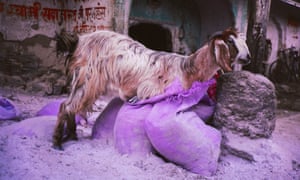
Gabriel Orozco 'Goat in Purple Bag' 1996
"Animality quietly crept up on me and completely took me by surprise. It was without doubt one of the most exciting exhibitions I saw during 2016, on for just over four weeks in November-December at the London Marian Goodman Gallery in Soho."
 
Imagine the best of the science and unusual curiosities of a Wellcome Collection exhibition mixed with works by modern and contemporary artists and you’ll have a good idea of what made this exhibition so special. ‘Animality’ featured the work of over seventy ‘creatures’ comprising of artists, philosophers, writers, scientists and illustrators throughout history (Darwin, Heidegger, Foucault are here and more) seeking to understand the complex relationship humans have with animals; what it means to be human, what it means to be an animal and how the division between the two is sometimes not as distant (if at all) as we thought. What works so well within this exhibition (and other exhibitions I have seen of this type) is this fusion between science, history and philosophy either integrated with art works or presented in context alongside them. This is science and history at its most engaging, its most visual and, I think, is significantly longer lasting in memory for it.
 
Albrecht Durer 'The Rhinoceros' 1515
 From the graphic illustrations of Charley Harper to the observed biological illustrations of Earnst Haeckel and woodcut of an armour plated Rhinoceros by Albrecht Durer (pic), ‘Animality’ covers a breadth of ways in which humans have not only sought to represent animals in art but in doing so were also attempting to understand and educate themselves and others in outcomes that are in some cases playful and in others personal or documentarian. They each offer insight into either our fear or love of beasts, bugs and creatures of all shapes and sizes; those that can eat us, others be eaten. There is a whole Zoo here, tigers, elephants, cats, slugs, horses, magpies, goats and camels including mythical creatures and hybrids throughout history. Despite being a mixed 'museum meets art' exhibition there is no hierarchy of one depiction of ‘animality’ being more significant than any other which is what makes it particularly rewarding, both the scientific and historical are presented alongside the whimsical and fun, grouped together into themes of origins, markings, crossings, variations, trace and extinction.
 
Roni Horn 'Untitled no. 4' 1998
Roni Horn’s photos featuring the backs of bird’s heads (pic) are surprisingly confrontational and unfamiliar, unsurprising  as it is an angle we are not accustomed to seeing birds being taken at. Similarly unsettling is Sarah Jones’s ‘Black Horse’ is striking not only in its scale but in its black on black image of a horse that almost disappears and reappears so we are forced to look at the catches of light on the muscles that define the form of the body. Elsewhere another horse piece by Steve McQueen, ‘Running Thunder’ depicts a horse that at first appears to be asleep in a grassy meadow, the scene a relatively still one until we see a fly pitch around its eyes and we make the startling discovery that this horse is in-fact dead. It is more a comment on our relationship with how we perceive and ‘expect’ to see animals in art; here the expectation of the horse as heroic or symbol of wealth as familiar in paintings by George Stubbs is given a dark twist. A goat stands inside a purple bag (pic) in one of a series of photos by Gabriel Orozco but is more photography than it is fitting in ‘nature photography’ as they do not attempt to present an ideal as much as a reality. Danh Vo reminds us of history in presenting a photo of a pekingese on a throne, the dog once belonging to Queen Victoria plundered from Beijing by British troops during the second opium war.
 
Carsten Holler 'Octopus' 2014 
Amidst this Noah’s Ark-like procession of animals Carsten Holler’s pink octopus (pic) creeps along the gallery floor adding an element of unexpected fun to the proceedings, making us aware of the space in which we inhabit together; like many of the works in this exhibition on its own it doesn’t have a huge amount to say but as part of the whole they form a welcome visual rest bite. Over by the stairs Fischli and Weiss’s projection of a cat lapping up cream plays on continuous loop which is fun if nothing for its almost banal familiarity. There is an almost absurd amount of work to process which only compounds why animals as a subject matter in art is so diverse and why even early George Shira photography first published in National Geographic in 1906 being shown alongside contemporary art works does prove that photography and art are still relevant in aiding education, research and conservation. Seeing Pavia and Gusmao’s slow-motion film of a peacock strutting should be a relatively familiar sight to anyone who’s ever been to a zoo or heritage garden but this film acts as a reminder, as though you were seeing them for the first time, to just how strange, marvellous and remarkable a bird they really are. Or if anything the works in this exhibition only highlight that the real mystery and most complex creature of all is in-fact the artist. Intellectually challenged I proceeded to scramble on two legs out the gallery door and into the jungle outside....
 
Roni Horn and Gabriel Orozco images Sourced from:  http://www.tate.org.uk; https://www.theguardian.com